


If you’ve ever walked outside and thought, “Something’s been eating my plants…”, you may already be noticing early signs of deer damage in your yard. In many cases, these signs of deer damage in yard environments show up days or even weeks before you ever see a deer face-to-face.
White-tailed deer are beautiful animals and a familiar sight in many suburban and rural areas. But when deer begin treating landscaping like their personal buffet, the damage can escalate quickly. Shrubs disappear overnight, gardens are stripped bare, and once-healthy evergreens show long-term stress. The frustrating part? Deer are often active at dawn, dusk, or overnight, so homeowners rarely catch them in the act.
The good news is that deer leave behind very specific clues. By learning how to recognize the patterns of deer activity, you can confirm what’s happening, intervene early, and prevent repeated feeding before damage becomes severe or permanent.
Below are the top five signs of deer damage in your yard, how to identify each one, what it tells you about deer behavior, and what steps you can take next.
One of the earliest and most reliable signs deer are damaging your yard is the presence of tracks.
What deer tracks look like:
Deer have cloven hooves, meaning each footprint shows:
Most adult white-tailed deer tracks measure between 1½ and 3½ inches long and 1 to 3 inches wide, depending on age, sex, and soil conditions.
Where deer tracks are easiest to spot:


On hard or dry ground, tracks may appear faint or incomplete, showing only pointed impressions.
How to read the trail pattern:
If heart-shaped prints repeatedly lead toward the same garden beds, shrubs, or evergreens, that’s a strong sign of deer damage in your yard and ongoing feeding activity.
While not pleasant to talk about, deer droppings are one of the most consistent signs deer are damaging your yard.
What deer droppings look like:

A single pile can contain 50–80 pellets and is often left where deer pause to feed or rest.
Seasonal differences in deer scat:
Finding fresh droppings repeatedly under shrubs, fruit trees, or near garden beds indicates that deer are visiting often, not just passing through.
From a behavior standpoint, this suggests deer feel safe on your property and have identified it as a reliable food source.
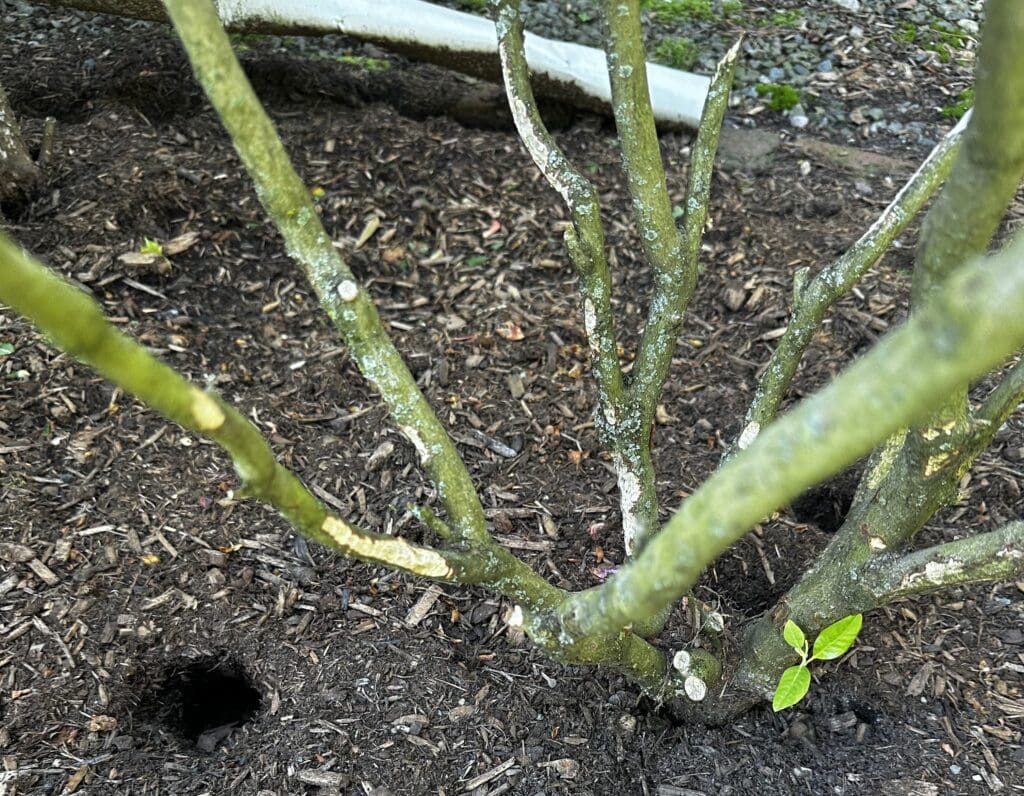
This is usually the first clue homeowners notice: plants that looked healthy yesterday suddenly appear chewed, torn, or stripped.
Why deer damage looks shredded:
Deer lack upper front teeth. Instead of cleanly clipping plants, they:
This feeding method creates:
If plant damage looks clean and angled, as if cut with scissors, it’s more likely caused by rabbits or rodents.
This is what rabbit feeding looks like:

Plants deer commonly target by season:
Spring: Hostas, tulips, daylilies, shrub buds

Summer: Roses, vegetables, annuals, fresh growth

Fall and Winter: Arborvitae, yew, evergreen shrubs, woody twigs


If damage occurs at deer head height and repeats in the same areas, it’s a textbook sign of deer damage in your yard.
When deer feel comfortable on a property, they don’t just feed, they linger.

Finding deer beds is another strong sign of deer damage in your yard and indicates that deer are using your property as part of their daily routine.
What a deer bed looks like:
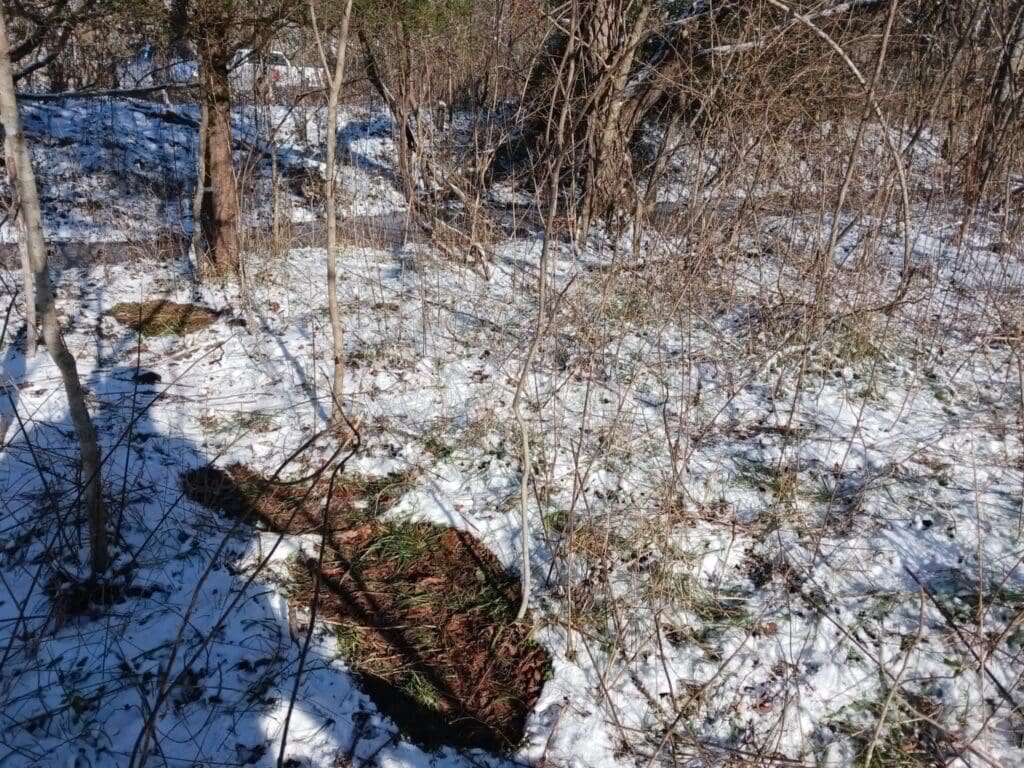
You may also notice:


Regular bedding means deer feel safe, which often leads to repeated feeding and escalating damage.
When deer move through a property consistently, they leave behind structural evidence.
Well-worn deer trails
Repeated movement creates narrow, compacted paths through grass or vegetation. These are visible routes linking woods, water, and food sources. If a trail connects wooded edges directly to landscaping, it confirms frequent deer traffic and ongoing yard damage.
Tree rubs
Male deer rub their antlers on trees in late summer and fall. Look for:
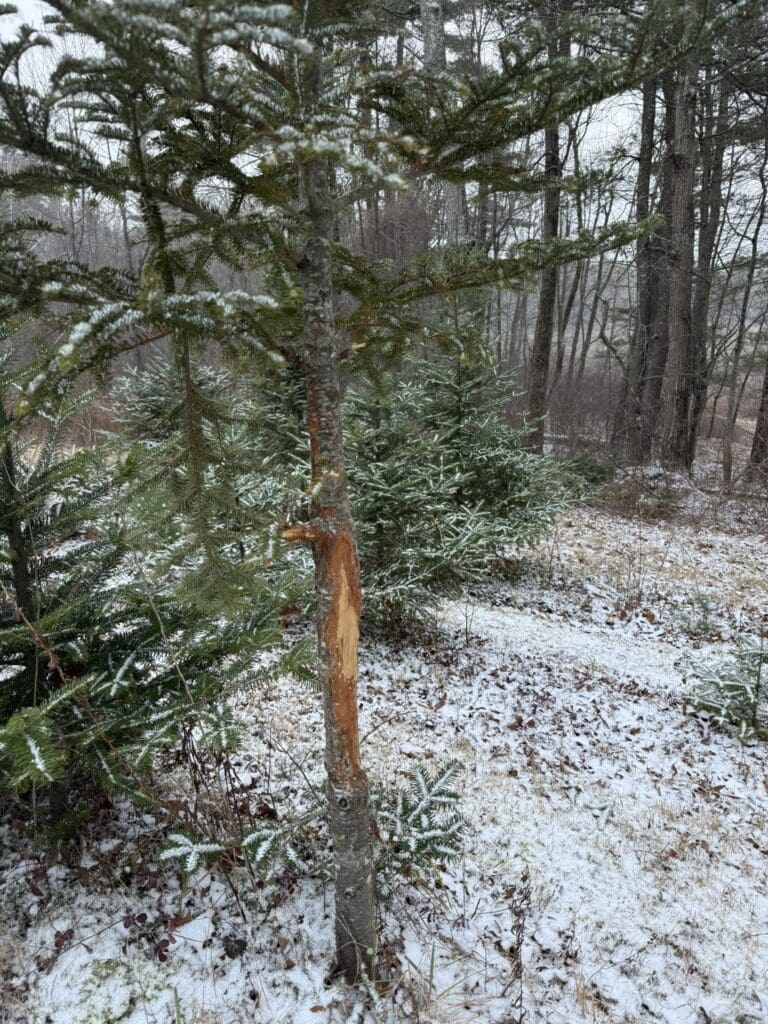
Rubs commonly appear on young saplings and signal heavy deer activity in the area.
Deer are habitual feeders. Once they discover a yard that feels safe and offers easy access to food, they tend to return, often daily. Over time, this repeated browsing weakens plants, reduces regrowth, and increases long-term damage.
This is why early intervention matters. The sooner you interrupt feeding behavior, the easier it is to protect your landscaping.
If you’ve noticed multiple indicators: tracks, droppings, shredded plants, bedding areas, or trails…deer are almost certainly active on your property.
Natural next steps homeowners can take:
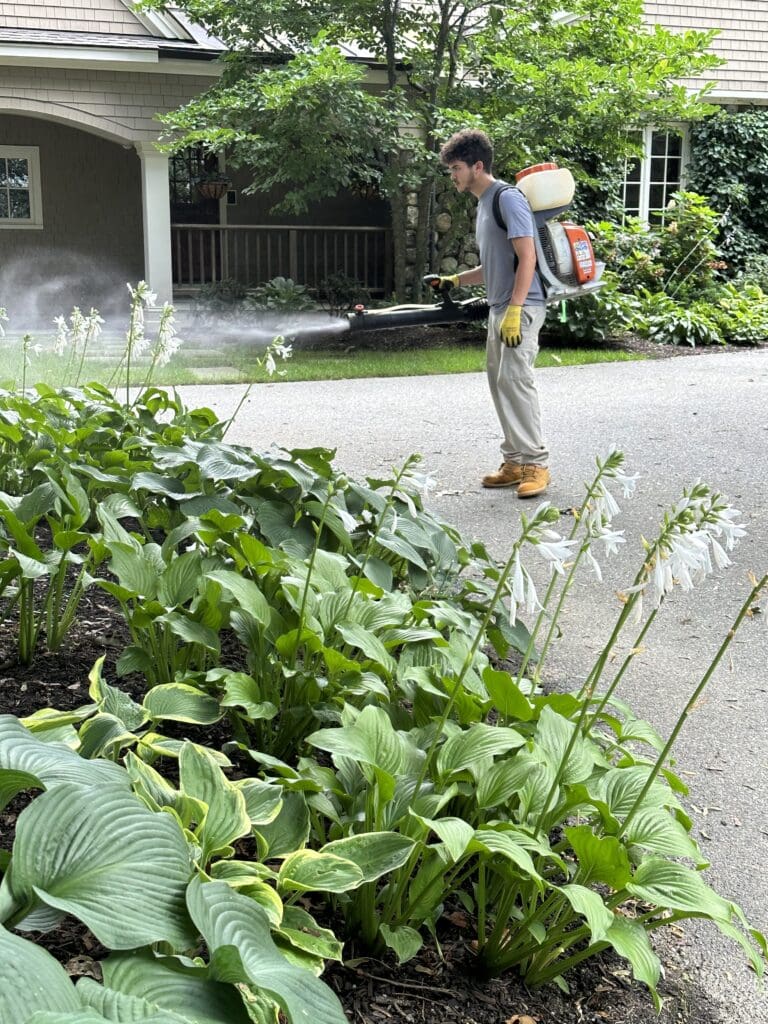
Many homeowners choose professional help when damage becomes persistent. Natural deer control services, like ohDEER’s All-Natural treatments, work by retraining deer behavior, making treated plants unpalatable so deer stop feeding and bedding on the property.


Recognizing the signs of deer damage in your yard helps you act early before shrubs, evergreens, and your expensive landscaping suffer irreversible harm.
At ohDEER, we specialize in All-Natural Deer Control that protects plants without harming families, pets, or the environment. Our treatments help break feeding patterns and restore balance so you can enjoy your outdoor space again, beautiful landscaping included.
1. What are the most common signs of deer damage in a yard?
Heart-shaped tracks, pellet-shaped droppings, shredded plant edges, tree rubs, worn trails, and flattened bedding areas.
2. How can I tell if deer, not rabbits, are eating my plants?
Deer leave torn, jagged edges. Rabbits leave clean, angled cuts.
3. Why is deer damage worse in winter?
Natural food sources decline, so deer turn to landscaping shrubs, evergreens, and tree bark.
4. How do I know if deer are bedding on my property?
Look for oval depressions 2½–3 feet long in grass, leaves, or snow, often near cover.
5. Will deer keep returning once they find food?
Yes. Deer are habitual and often return daily unless feeding behavior is disrupted.
6. What’s the best natural way to prevent deer damage?
Scent-based repellents, fencing, deer-resistant landscaping, and professional natural deer control services.
7. Can deer rubs kill trees?
Yes. Repeated rubbing can strip bark and interrupt nutrient flow, killing young trees.
8. When should I act on deer damage?
As soon as you see more than one sign. Early intervention prevents long-term loss.