


Spending time outside with your dog is one of the best parts of being a pet owner. Whether it’s backyard playtime, neighborhood walks, or hiking local trails, dogs naturally explore the same environments where ticks thrive. That’s why tick checks for dogs are one of the most important habits you can build into your routine. Ticks can spread harmful vector-borne diseases to you and your dog.
Some pet owners don’t realize that different breeds of dogs are much harder to check for ticks than others. Coat type, hair length, color, and even body structure all impact how easy it is to find ticks before they become a problem.
In this guide, we’ll cover:
Ticks are incredibly small and designed to stay hidden. Many are no bigger than a poppy seed when they first attach, making them difficult to detect, especially on certain coat types.
Dogs rarely show immediate symptoms of a tick bite, so knowing how to check your dog for ticks is essential. In many cases, your hands are just as important as your eyes.
The biggest factor is your dog’s coat.
If you’ve ever wondered which dogs are hardest to check for ticks, it usually comes down to one or more of these coat characteristics.
Dogs with dense, layered coats create the perfect hiding place for ticks.
Examples include:


Why ticks are harder to spot:
These dogs are among the top dogs harder to spot ticks on because visual checks alone are rarely enough.
Curly coats do not just trap debris, they also trap ticks.
Examples include:
Why they are difficult:
For these dogs, dog tick inspection tips should always include slow, hands-on checks rather than quick scans.
Even if the coat is not thick, color matters.


Why dark coats make tick checks harder:
This is one of the most overlooked reasons some dogs are harder to inspect.
Even dogs without full long coats can be harder to check if they have feathering or longer hair in certain areas.


Common tick hiding spots on dogs with longer hair:
Ticks prefer warm, hidden areas, and long hair gives them plenty of cover.
While some dogs require more effort, others make tick checks for dogs much easier.
Examples include:


Why they are easier:
These are some of the most common dogs easier to spot ticks on.
Color contrast plays a big role.


Why it helps:
Less fur means fewer hiding places.
Benefits:
No matter your dog’s coat type, ticks tend to attach in similar locations. Knowing where to find ticks on dogs makes your inspections more effective.
Focus on these high-risk areas:

Pro tip. Do not rely on sight alone. Run your hands over your dog’s body to feel for small bumps.
If you are wondering how to check your dog for ticks, follow this simple routine.


Move slowly and use your fingers to feel for anything unusual.
According to University of Rhode Island TickEncounter Resource Center, ticks found on dogs generally fall into two categories: attached and feeding, or loose and wandering. While attached ticks may seem more concerning, they are actually less likely to transfer to humans because they stay in place while feeding and will eventually drop off once engorged. The greater risk comes from loose ticks moving through your dog’s fur. These ticks can wander for hours, especially in thick or dense coats, searching for a place to attach. During that time, they can easily transfer onto furniture, floors, or even people.


This is one of the key reasons why dogs with thick, fluffy, or double coats are harder to check for ticks and may unknowingly carry ticks into the home. Regular grooming and thorough tick checks after outdoor time are essential to catch both attached and wandering ticks before they become a bigger problem.
Knowing how to check a dog for ticks is only half the battle. Properly (and promptly) removing any attached ticks you find matters just as much, especially since coat type can make the process easier or more challenging.
Dogs with short, light coats are typically easier when it comes to tick checks for dogs and removal. Ticks are easier to spot on the surface of the skin, and you can usually access them without much obstruction.
To remove a tick on a short-haired dog:
Because ticks are easier to see on these dogs, early removal is more likely, which reduces risk.
Dogs with long, curly, or double coats are often the dogs harder to spot ticks on. Their fur creates layers that can hide ticks deep against the skin, making both detection and removal more difficult.
For these dogs:
In thick coats, ticks may be embedded in hard-to-reach areas, so patience is key. Rushing can cause the tick to break apart or slip out of your grip.
Curly-coated dogs can be especially tricky because ticks can get tangled in the hair rather than sitting cleanly on the skin.
Tips for these coat types:
No matter the coat type:
Consistent tick prevention for dogs and thorough inspections are the best way to reduce risk, especially for dogs with coats that make ticks harder to find.
Tick exposure varies by region, but the risk is widespread.
Routine checks are essential, but prevention is just as important.
Effective tick prevention for dogs includes:
Dogs often pick up ticks in their own yard, not just on hikes.
Even if your dog is in the harder to check category, these tips help.
Check your dog:


Consistency is key.
You are more likely to feel a tick before you see it.
Regular grooming makes inspections easier, especially for curly or long-haired dogs.
You do not always need a full inspection. Prioritize high-risk areas first.


Reducing ticks in your environment lowers your dog’s exposure in the first place.
At ohDEER, we believe tick prevention for dogs starts with the yard they play in. Our approach focuses on:
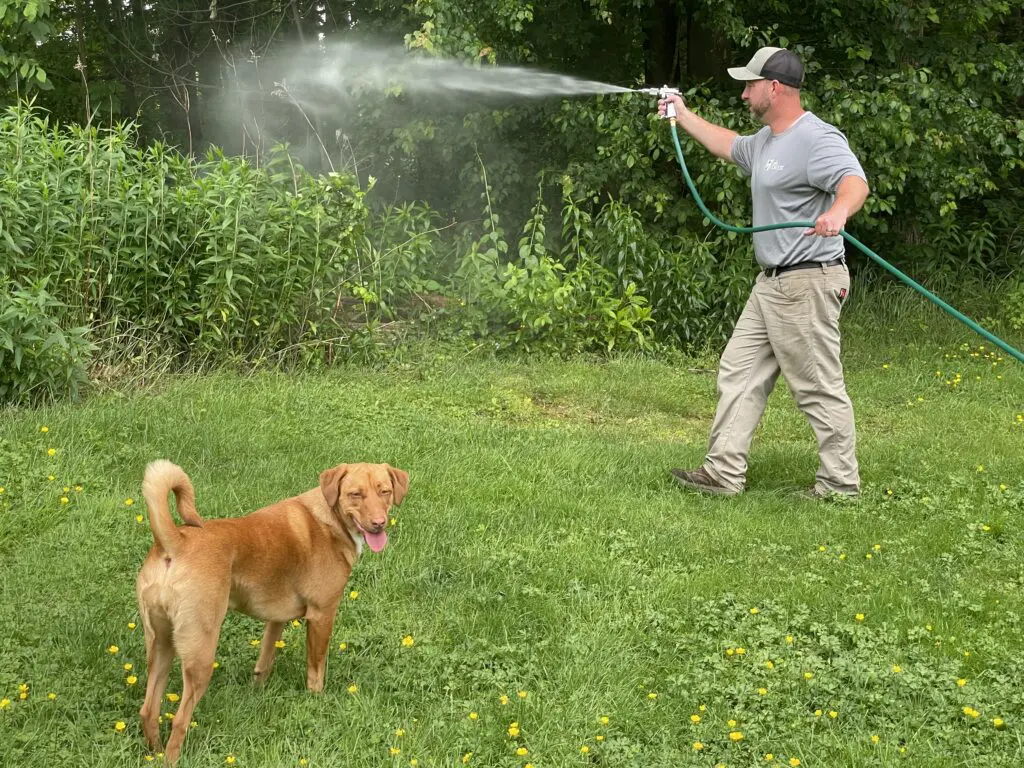
Because preventing ticks is always easier than finding them after the fact.
Which dogs are hardest to check for ticks?
Dogs with thick, curly, long, or dark coats are the hardest to inspect because ticks can hide more easily and blend in.
Which dogs are easier to spot ticks on?
Short-haired, light-colored, and thin-coated dogs are much easier to check.
How often should I do tick checks for dogs?
Daily during peak season, especially after outdoor activity.
Where do ticks hide most on dogs?
Ears, under collars, between toes, armpits, and the groin area.
What’s the best way to check a dog for ticks?
Use both your hands and eyes. Slowly feel for small bumps across the body.
Can ticks live in my yard?
Yes. Ticks commonly live in leaf litter, shaded areas, and tall grass.
Understanding which dogs are hardest to check for ticks can make a big difference in protecting your pet. While some dogs are naturally easier to inspect, every dog requires consistent checks and prevention.
Whether your dog has a thick double coat or a short, smooth one, the goal is the same. Stay consistent, know where to look, and take proactive steps to reduce exposure.
Because more time outside should always feel safe for both you and your dog.