


When most people hear the phrase “tick nest,” they picture something similar to a wasp nest, ant hill, or bird nest tucked away somewhere in the yard. The reality is much different.
Ticks do not build nests.
In fact, one of the biggest misconceptions about ticks is that they create organized colonies or tick nests. What people often call a tick nest is actually a cluster of tick eggs laid by a female tick in a protected location. Understanding what these egg masses look like, where they’re found, and what happens after they hatch can help homeowners reduce tick activity around their property and better protect their families and pets.
If you spend time gardening, hiking, playing with your kids in the yard, or walking your dog, knowing how to recognize tick egg masses, understand common tick habitat, and identify potential tick hotspots can make a big difference.
Technically, no. Ticks are not social insects like ants, bees, or termites. They do not work together to build structures or care for their young. After feeding and mating, an adult female tick drops off her host and looks for a sheltered location where she can lay her eggs.
If you’ve ever wondered “where do ticks lay eggs?”, the answer is usually in moist, protected environments that provide shade and humidity. Once a female tick finishes laying her eggs, she dies. The eggs are left on their own until they hatch.
Because these egg clusters are often found in one concentrated spot, many people refer to them as a tick nest. While the term isn’t scientifically accurate, it has become commonly used to describe a tick egg mass or cluster of tick eggs.
One of the most common questions homeowners ask is, “What do tick eggs look like?” Tick eggs are surprisingly small.
A typical tick egg mass resembles:

Depending on the species, a single female tick can lay well over 1,000 eggs, and some species may produce several thousand.
Many people mistake tick eggs for:

Unlike spider egg sacs, tick eggs are not enclosed in silk. Instead, they appear as exposed clusters of tiny round eggs stuck together in a dense tick egg mass.
Female ticks look for locations that provide moisture and protection from sunlight. Understanding where ticks lay eggs can help homeowners identify areas of their yard that may support tick populations.
Leaf litter is one of the most common places for tick eggs.
The layer of decomposing leaves found beneath trees and shrubs provides:
This is one reason why ticks are often concentrated around wooded property edges and unmanaged landscape beds. These environments create ideal tick habitat throughout the year.
Tick eggs may be found beneath:
These areas trap moisture and create ideal conditions for survival.
Woodpiles often attract rodents, which are important hosts for immature ticks. The combination of shade, humidity, and wildlife activity makes woodpiles a common tick hotspot.
Stone walls frequently support populations of mice, chipmunks, and other small mammals that ticks rely on throughout their tick life cycle.
Dark, undisturbed areas beneath structures often provide favorable humidity levels for tick survival.
Research has shown that ticks are commonly concentrated along the transition zone between woods and lawn. These edge habitats provide ideal conditions for both ticks and their animal hosts and are among the most common tick hotspots found on residential properties.
The eggs eventually hatch into tick larvae. These newly emerged ticks are commonly called seed ticks. Many homeowners mistake clusters of seed ticks for a moving patch of dirt or tiny insects.
Seed ticks are:
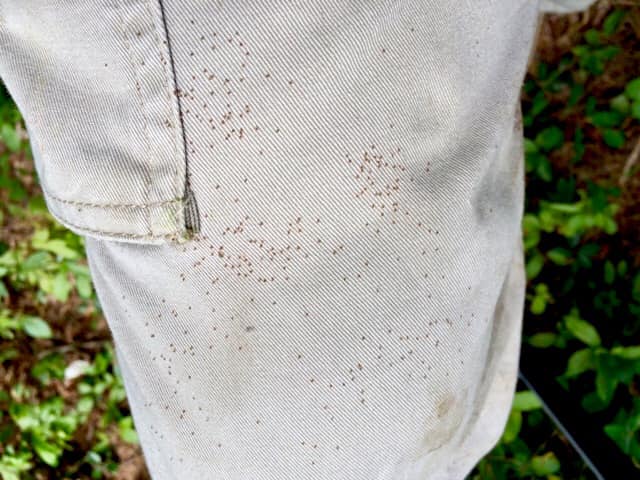
Because they hatch together, thousands of tick larvae may be concentrated in a very small area before they disperse to find hosts. This is often the stage people are seeing when they report finding a tick nest.
Imagine brushing against a patch of vegetation and suddenly discovering dozens of tiny ticks crawling on your socks. That’s often the result of encountering a cluster of recently hatched seed ticks. Unlike adult ticks, which are usually encountered individually, seed ticks frequently appear in large numbers because they remain grouped together shortly after hatching. Although tick larvae are tiny, they are actively searching for their first blood meal.
They commonly feed on:
Once fed, they develop into nymphs and continue progressing through the tick life cycle.
Despite the attention tick nests receive online, most homeowners never actually find a tick egg mass. There are several reasons for this:
Even a large egg cluster may be only an inch across.
Ticks intentionally choose concealed locations protected from drying out.
Their coloration often matches surrounding leaves, soil, and organic matter.
Homeowners are far more likely to encounter nymphs, adult ticks and seed tick clusters, rather than the egg mass itself.
For homeowners, identifying tick habitat is often more useful than searching for egg masses. The places where ticks survive and wait for hosts matter far more than the location of a single tick nest or tick egg mass.

High-risk tick habitat includes:
The transition between lawn and woods consistently produces higher tick activity.
Dense vegetation creates shade and humidity.
Leaves hold moisture and protect ticks from extreme temperatures.
Brush piles provide habitat for mice, chipmunks, and rabbits.
The less frequently an area is maintained, the more suitable it becomes for ticks.
Ticks often concentrate where deer, rabbits, and rodents regularly travel. These areas become recurring tick hotspots because they support both ticks and the animals they depend on throughout their life cycle.
False. Ticks do not create underground nests, tunnels, or colonies.
False. Ticks can move through their tick life cycle over multiple years while feeding on different hosts. A tick found in your yard may have originated elsewhere.
False. Ticks cannot jump or fly. Instead, they climb onto vegetation and wait for a host to brush past them in a behavior called “questing.”
Often false. Many viral images claiming to show tick nests have been debunked by entomologists. Real tick eggs and tick egg masses are much smaller than most viral photographs suggest.
The most effective approach for reducing tick populations in your yard is habitat modification.
Regularly clear leaves from:
Reduce shade and improve airflow by cutting back overgrown plants.
Keep firewood away from frequently used areas.
Limit hiding places that attract mice and chipmunks.
Wood chip or gravel borders between wooded areas and lawn can help reduce tick migration into recreational spaces.

Deer play an important role in supporting tick populations. Reducing deer feeding and bedding activity around your property may help reduce future tick pressure.
The challenge with ticks is that they don’t stay in one place. Even if a homeowner finds and removes a tick egg mass, other ticks may still be present throughout the property. Professional tick control programs focus on the tick habitat where ticks spend most of their lives rather than searching for individual egg clusters.
At ohDEER, our All-Natural Tick Control Program targets:

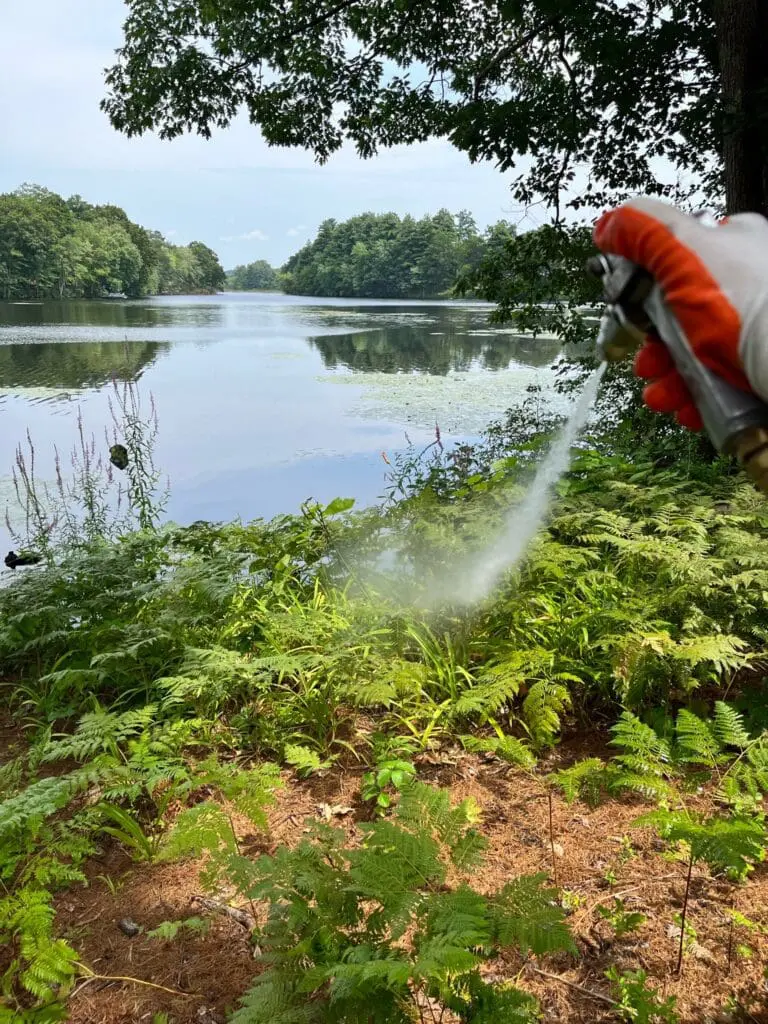
Our saturation method applies 40–60 gallons of plant-based solution throughout the areas where ticks live, hide, and quest for hosts. Instead of simply treating open lawn areas, we focus on the locations that matter most.


While people often search for information about a tick nest, the truth is that ticks do not build nests at all. What most people call a tick nest is actually a tick egg mass containing hundreds or even thousands of tick eggs. These egg clusters are typically hidden in leaf litter, dense vegetation, woodpiles, and other moist, protected locations. Once they hatch, the resulting seed ticks, or tick larvae, may appear in large groups before dispersing to find their first host and continuing through the tick life cycle.
For homeowners, the best defense is not hunting for tick nests. It’s understanding where ticks live, recognizing common tick hotspots, reducing favorable tick habitat, performing regular tick checks, and implementing a comprehensive tick management strategy that targets the areas where ticks spend most of their time.
The more you know about tick behavior, the easier it becomes to protect your family, pets, and outdoor spaces from these persistent parasites.